

[Soft drinks & Health science]
New Insights into Supporting Motor Function Through Neuromuscular Connectivity Citicoline Promotes Neuromuscular Junction Formation and Enhances Motor Neuron Synchrony
- CSV
- Research and Technology
July 27, 2026
Kirin Holdings Company, Limited
TOKYO, July 27, 2026 – Kirin Holdings Company, Limited (Kirin Holdings) conducted a study to investigate the effects of citicoline*1 on neuromuscular connectivity—a fundamental component of motor function—focusing on its impact on the neuromuscular junction (NMJ)*2 and the motor neuron activity.
This study showed that citicoline increased gene expression related to NMJ formation and acetylcholine receptor (AChR) clustering and improved motor neuron synchrony.
The results of this study were presented at “NUTRITION 2026”*3, held from July 25 to July 28, 2026.
*1 A compound known as a precursor to phosphatidylcholine, a component of neuronal cell membranes, and currently under investigation for its role in neural function. It is manufactured by Kyowa Hakko Bio, a Kirin Group company, and has been sold globally, primarily in Europe and the United States, since the early 1990s. It is used worldwide as an ingredient in supplements and non-alcoholic beverages that support brain function, as well as in pharmaceuticals.
*2 The junction between motor neurons and skeletal muscle fibers
*3 NUTRITION 2026 (https://nutrition.org/meeting/present-your-science/)
With the aging population and growing health consciousness, preventing age-related declines in motor function and maintaining quality of life (QOL) and physical performance have become important social issues. In recent years, a condition in which muscle strength declines despite maintained or increased muscle mass has been reported. This condition, known as “dynapenia,” is considered a major factor contributing to increased risk of falls and the need for long-term care. A decline in the functional coordination between motor neurons and muscles is considered one of the underlying causes of this phenomenon.
In this context, the neuromuscular junction (NMJ), which connects motor neurons to skeletal muscle fibers, plays a crucial role in muscle force generation and motor control. Maintaining optimal NMJ function is considered important for motor performance and is considered important not only in aging but also in athletic performance and resistance training.
In this study, we focused on the NMJ and evaluated the effects of citicoline, a compound reported to have neuroprotective properties, on NMJ formation. We established a neuromuscular cell model by co-culturing mouse myoblasts and motor neuron-like cells, and evaluated the effects of citicoline on gene expression related to NMJ formation and on AChR clustering. As the results, citicoline significantly increased the expression of genes involved in NMJ formation and promoted AChR clustering.
Furthermore, we investigated the effects of citicoline on neuronal activity using iPSC-derived motor neurons. Citicoline enhanced motor neuron synchrony. Such synchrony is considered one of the neural mechanisms involved in regulating muscle output and generating rapid force.
Taken together, these findings suggest that citicoline may support NMJ formation and enhance motor neuron synchrony, indicating a potential role in neuromuscular function and motor coordination.
Background and Objectives
The neuromuscular junction (NMJ) connects motor neurons to skeletal muscle fibers and plays a critical role in muscle force generation and motor function by transmitting signals from motor neurons to muscles. While citicoline is known to have neuroprotective properties, its effects on the NMJ remain unclear. Therefore, this study aimed to investigate the effects of citicoline on NMJ formation.
Research Methods
Mouse myoblasts (C2C12) and motor neuron-like cells (NSC-34) were co-cultured to establish a neuromuscular cell model. Citicoline was added to the model, and the expression of genes related to NMJ formation, including Dok7 and CHRNE, was analyzed. Furthermore, immunostaining for AChR was performed to evaluate AChR clustering, an indicator of NMJ formation.
In addition, using iPSC-derived motor neurons, the effects of citicoline on neural activity were evaluated using
microelectrode arrays.
Research Findings
① Citicoline increased the gene expression related to NMJ formation in a neuromuscular cell model
Citicoline significantly increased the expression of the Dok7 gene, which plays a crucial role in NMJ formation, as well as the CHRNE gene, which encodes a subunit of the acetylcholine receptor (AChR).
-
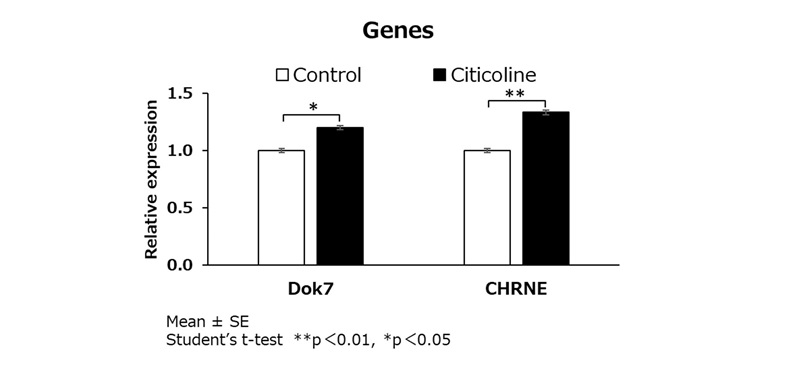
Figure 1. Citicoline increased the gene expression involved in NMJ formation in a neuromuscular cell model
② Citicoline enhanced AChR clustering in a neuromuscular cell model
Consistent with the gene expression results described above, citicoline significantly increased AChR clustering parameters (number, area, and intensity), indicating an enhance in AChR clustering.
-

Figure 2. Neuromuscular cell model with AChR stained in red
-
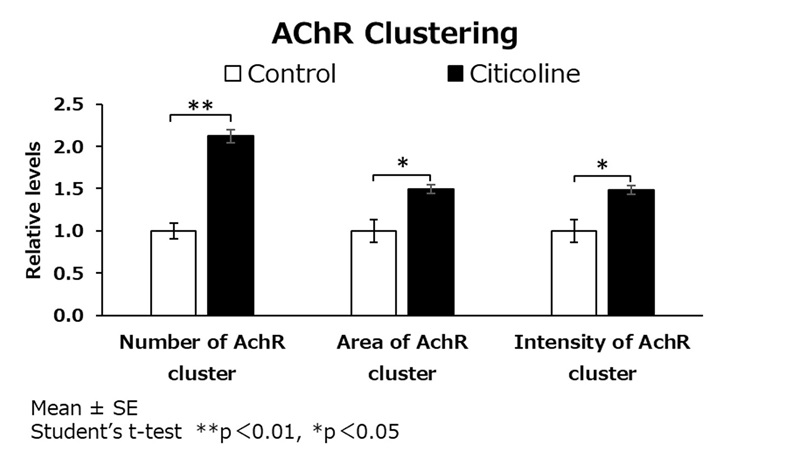
Figure 3. Citicoline enhanced AChR clustering parameters in a neuromuscular cell model
③ Citicoline improved motor neuron synchrony in iPSC-derived motor neurons
The results showed that citicoline significantly increased the Synchrony Index, which reflects improved motor neuron synchrony.
-
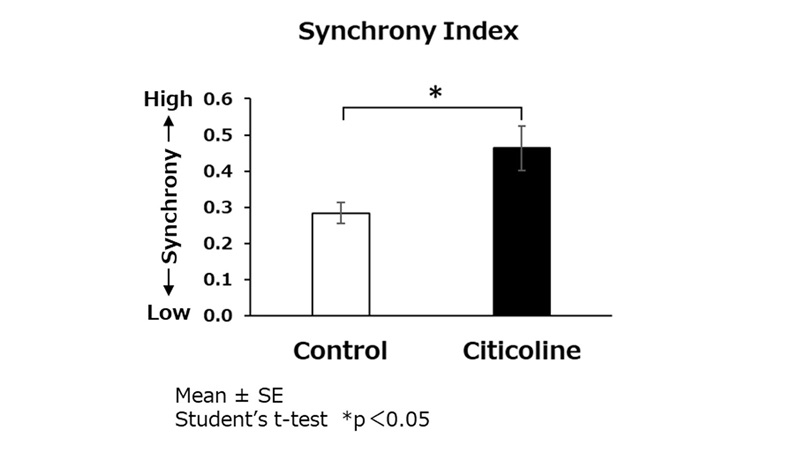
Figure 4. Citicoline improved motor neuron synchrony in iPSC-derived motor neurons
Key Findings
Citicoline was found to be associated with NMJ formation, which is involved in signal transmission from motor neurons to muscles. In addition, citicoline was found to be associated with enhanced motor neuron synchrony in iPSC-derived motor neurons. These findings suggest that citicoline may enhance coordination between motor neurons and muscles and have the potential to support aspects of motor function, such as coordination and rapid force production.
Future Outlook
We will continue to advance research focusing on neuromuscular function. Through efforts to maintain and improve motor function in both aging populations and athletic, we aim to contribute to extending healthy life expectancy and improving quality of life.
About Kirin Holdings
Kirin Holdings Company, Limited is a global company operating across three core business domains spanning Alcoholic Beverages, Non-alcoholic Beverages & Health Science, and Pharmaceuticals. The company traces its roots to Japan Brewery, established in 1885, which later became Kirin Brewery in 1907. Since then, Kirin has expanded its business operations by leveraging fermentation and biotechnology as core strengths. The company entered the pharmaceutical field in the 1980s, which has since grown into a global business. In 2007, the company transitioned to a pure holding company structure as Kirin Holdings, and it is now strengthening its Non-alcoholic Beverages & Health Science domain.
Under its long-term vision “Innovate2035!Innovate2035!”, the Kirin Group is focused on creating value that encourage behavioral change among consumers and patients, creating new lifestyle habits in the areas of food and health. With a unique business portfolio spanning Alcoholic Beverages, Non-alcoholic Beverages & Health Science, and Pharmaceuticals, the Group will further expand group-wide initiatives that support both mental and physical well-being.
The Kirin Group will continue to advance innovation through the combined strength of its people and technology, creating both social and economic value as a global leader in CSV*, while pursuing sustainable, long-term growth in corporate value.
*Creating Shared Value: combined added value for consumers as well as for society at large.
GALLERY
-
【Figure 1】Citicoline increased the gene expression involved in NMJ formation in a neuromuscular cell model
-
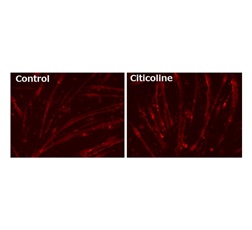
【Figure 2】Neuromuscular cell model with AChR stained in red
-
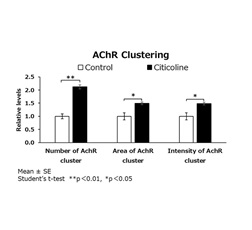
【Figure 3】Citicoline enhanced AChR clustering parameters in a neuromuscular cell model
-
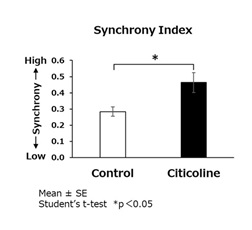
【Figure 4】Citicoline improved motor neuron synchrony in iPSC-derived motor neurons