[Soft drinks & Health science]
Continuous Intake of Lacticaseibacillus paracasei KW3110 Confirmed to Alleviate Ocular Symptoms Associated with Mild to Moderate Hay Fever
- CSV
- Research and Technology
October 19, 2026
Kirin Holdings Company, Limited
TOKYO, October 19, 2026 - The Health Science Research Institute of Kirin Holdings Company, Limited (Kirin Holdings) conducted a clinical trial to evaluate the effects of consuming a food containing the lactic acid bacterium Lacticaseibacillus paracasei KW3110 (hereinafter “L. paracasei KW3110” *1) on nasal and ocular symptoms associated with mild to moderate hay fever*2 (seasonal allergic symptoms). The results confirmed relief of ocular symptoms, particularly during periods of high pollen dispersion. A significant improvement was also observed in the degree of impairment in daily life, specifically in “Concern About Others’ Perceptions”. These research findings were presented at the 75th Annual Meeting of the Japanese Society of Allergology, held at the Kyoto International Conference Center from October 15 to 18, 2026.
*1 International Archives of Allergy and Immunology. 2004;135:205–215.
*2 The trial enrolled participants who were classified as having mild to moderate nasal symptoms based on the severity classification in the Practical Guideline for the Management of Allergic Rhinitis in Japan and who were also determined to have ocular symptoms using the Japanese Standard Quality of Life Questionnaire for Allergic Rhinitis.
According to the “Hay Fever Survey 2026” conducted by Weathernews Inc.*3, more than one in two respondents reported having hay fever. In recent years, in addition to nasal symptoms such as sneezing and runny nose caused by hay fever (seasonal allergic symptoms), ocular symptoms such as itchy eyes, foreign-body sensation, and watery eyes have significantly disrupted daily life. The impact on quality of life (QOL) is particularly severe,*4 and hay fever is increasingly being recognized as a societal issue.
Allergic reactions such as hay fever are closely associated with immune cells such as Th2 cells. Excessive activity of these cells induces Type 2 inflammation,*5 which contributes to the development of allergic symptoms. Because allergic symptoms occur when these immune cells elicit strong inflammatory responses to substances such as pollen, dust mites, and house dust, it is important to prevent the exacerbation of Type 2 inflammation.
Kirin has previously reported that L. paracasei KW3110 has a greater ability than other lactic acid bacteria to induce the production of cytokines*6 that suppress Type 2 inflammation, including interleukin-12 (IL-12) *7(Figure 1). A previous clinical trial has also confirmed that L. paracasei KW3110 alleviates nasal discomfort associated with mild to moderate hay fever.*8
-
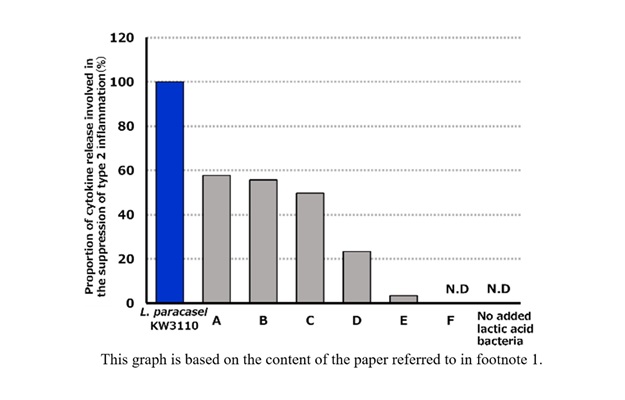
Figure 1. Proportion of Type 2 Inflammation–Suppressing Cytokine (IL-12) Production by Immune Cells Stimulated with Various Lactic Acid Bacteria
Based on these foundational research findings, this clinical trial was initiated to further explore the potential of L. paracasei KW3110. Kirin believes that the insights gained from this study are meaningful for research addressing the health challenges faced by people whose quality of life (QOL) is diminished by mild to moderate hay fever. Going forward, Kirin will consider using these findings in the research and development of products that contribute to people’s health.
*3 Weathernews Inc., “Hay Fever Survey 2026” https://jp.weathernews.com/news/54854/
*4 Ministry of Health, Labour and Welfare, “For Appropriate Hay Fever Treatment”
https://www.mhlw.go.jp/new-info/kobetu/kenkou/ryumachi/dl/kafun_chiryo.pdf
*5 A type of inflammation associated with allergic reactions.
*6 A type of signaling molecule involved in allergic reactions.
*7 Interleukin-12 (IL-12): A type of cytokine that suppresses allergic reactions associated with Type 2 inflammation.
*8 Kirin Holdings news release dated October 31, 2025: Lacticaseibacillus paracasei KW3110 Confirmed to Alleviate Mild to Moderate Hay Fever Symptoms | 2025 | KIRIN - Kirin Holdings Company, Limited
Background and Objectives
Hay fever (seasonal allergic symptoms) is an allergic disease triggered by pollen, most commonly presenting as allergic rhinitis, including sneezing, runny nose, and nasal congestion, and allergic conjunctivitis, including itchy eyes and tearing. The prevalence of hay fever (seasonal allergic rhinitis) exceeds 40% of the population in Japan. In particular, the prevalence of Japanese cedar pollinosis has increased by approximately 10% over the past decade. The prevalence of hay fever may continue to increase, making it a significant societal challenge.
There is growing demand for the development of safe products that use beneficial food-derived ingredients to alleviate allergic symptoms, with fewer concerns such as drowsiness. Through previous research, Kirin has demonstrated that L. paracasei KW3110 activates dendritic cells and macrophages, which are types of innate immune cells, enhances their ability to produce Th1 cytokines, and alleviates allergic symptoms. This study aims to support the development of products containing L. paracasei KW3110 that alleviate allergic symptoms such as hay fever (seasonal allergic rhinitis), with the goal of improving the quality of life (QOL) diminished by allergic symptoms.
Research Method
The study was designed as a randomized, double-blind, placebo-controlled trial. A total of 130 men and women aged 20 to 65 years who experienced nasal and ocular discomfort in early spring, were classified as having mild to moderate allergic rhinitis, and did not regularly use medications to alleviate their symptoms were enrolled. Participants consumed a food containing L. paracasei KW3110*9 or a placebo food*10 for eight weeks between January and March.
Self-reported nasal and ocular symptoms were assessed using the Japanese Allergic Rhinitis Standard Quality of Life Questionnaire No.1 (JRQLQ No.1),*11 and the severity of allergic rhinitis symptoms was evaluated based on a physician’s diagnosis.
Research Findings
Compared with the consumption of the placebo food, consumption of the food containing L. paracasei KW3110 resulted in significant improvements in changes in the self-reported symptom scores for “Ocular Symptoms” and “Concern About Others’ Perceptions” *12 at weeks 6 and 8 of intake, corresponding to the period of high pollen dispersion (Figure 2).
-
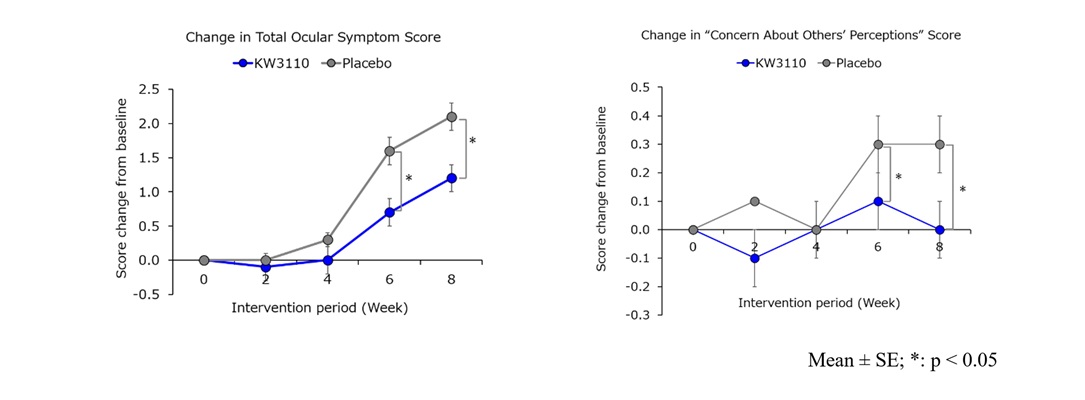
Figure 2. Total Ocular Symptom Score and “Concern About Others’ Perceptions” Score
*9 A food containing 50 mg of heat-killed L. paracasei KW3110, equivalent to at least 140 billion cells.
*10 A food that does not contain L. paracasei KW3110.
*11 A questionnaire described in the Practical Guideline for the Management of Allergic Rhinitis in Japan that assesses nasal and ocular symptoms caused by allergic rhinitis and their impact on daily life.
*12 A subjective symptom score reflecting concern about how symptoms may be perceived by or affect surrounding people.
Implications
The findings suggest that L. paracasei KW3110 alleviates ocular discomfort during periods of high pollen dispersion and mitigates the decline in quality of life, particularly with respect to “Concern About Others’ Perceptions.”
Future Outlook
Through continued research on L. paracasei KW3110, Kirin aims to contribute to addressing health challenges by alleviating the decline in quality of life (QOL) caused by allergic symptoms such as hay fever.
About Lacticaseibacillus paracasei KW3110
L. paracasei KW3110 is a lactic acid bacterium discovered through joint research conducted by Kirin and Koiwai Dairy Products Company, Limited from among more than 100 strains. This strain has been studied for its potential to support immune balance and was originally isolated from cheese as a strain of Lacticaseibacillus paracasei.
About Kirin Holdings
Kirin Holdings Company, Limited is a global company operating across three core business domains spanning Alcoholic Beverages, Non-alcoholic Beverages & Health Science, and Pharmaceuticals. The company traces its roots to Japan Brewery, established in 1885, which later became Kirin Brewery in 1907. Since then, Kirin has expanded its business operations by leveraging fermentation and biotechnology as core strengths. The company entered the pharmaceutical field in the 1980s, which has since grown into a global business. In 2007, the company transitioned to a pure holding company structure as Kirin Holdings, and it is now strengthening its Non-alcoholic Beverages & Health Science domain.
Under its long-term vision “Innovate2035!”, the Kirin Group is focused on creating value that encourages behavioral change among consumers and patients, creating new lifestyle habits in the areas of food and health. With a unique business portfolio spanning Alcoholic Beverages, Non-alcoholic Beverages & Health Science, and Pharmaceuticals, the Group will further expand group-wide initiatives that support both mental and physical well-being.
The Kirin Group will continue to advance innovation through the combined strength of its people and technology, creating both social and economic value as a global leader in CSV*, while pursuing sustainable, long-term growth in corporate value.
*Creating Shared Value: combined added value for consumers as well as for society at large.