
Containers and Packaging
Circulates containers and packaging in a sustainable way
Containers and packaging are essential to maintain the quality of products when delivering them to customers. Greenhouse gas (GHG) emissions, however, are currently unavoidable in the manufacturing and transportation of containers and packaging. In addition, the excessive extraction of raw materials for containers and packaging and the improper disposal of used containers and packaging can damage natural capital. To address these various issues related to containers and packaging, the Kirin Group has promoted 3Rs (Reduce, Reuse, Recycle), and has aimed to make containers and packaging lighter, utilize recycled containers, and achieve a high recycling rate. In response to concerns over deforestation of forests used as raw materials for paper containers and packaging, as well as human rights issues, we have been promoting the sustainable use of paper. By the end of 2020, Kirin Brewery, Kirin Beverage, and Mercian achieved a 100% usage rate of FSC®-certified paper for their paper containers and packaging.
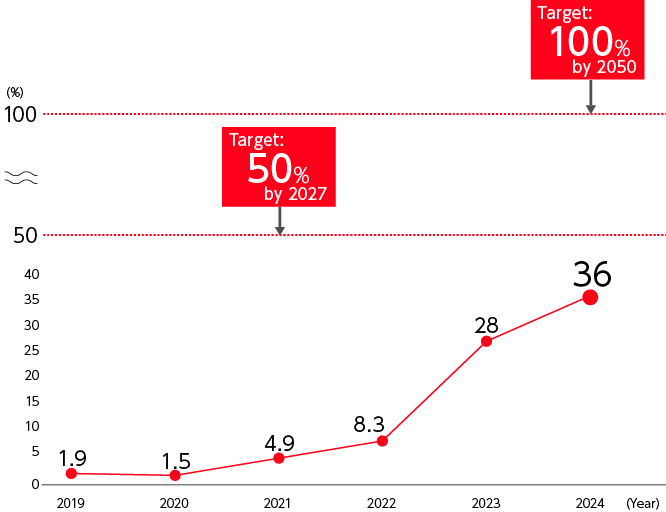
To address the issue of plastic waste, we formulated the “Kirin Group Plastic Policy” in 2019, setting a goal to increase the proportion of recycled resin used in PET bottles in Japan to 50% by 2027. While we have been advancing the use of mechanically recycled PET resin, we are also strengthening efforts to utilize chemical recycling, which enables the regeneration of high purity recycled PET resin even from contaminated used PET bottles and other PET resin products.
Furthermore, to efficiently sort, collect, and recover used PET bottles, we are collaborating with various companies and local governments to promote bottle-to-bottle initiatives. Through these efforts, we aim to reduce the use of fossil-derived raw materials and contribute to the development of a circular economy.
Main Activities
- Developed the "Kirin Group Plastic Policy" in 2019, and set a target to replace 50% of PET resin used in Japan with recycled PET resin by 2027
- Expanded the product line of “R100 PET bottles” made from 100% recycled PET resin
- Began selling no label products in 2021 in order to reduce plastic usage.
- Strengthened collaboration with other companies and local governments as a part of efforts to collect PET bottles
- Achieved 100% usage of FSC-certified paper for paper containers and packaging in Kirin Brewery, Kirin Beverage, and Mercian (2020)
- Developed technology for decomposing PET and refining the monomers produced after decomposition in relation to chemical recycling of PET bottles (2023)
- Started using chemically recycled resin in PET bottles for alcoholic beverages for the first time in Japan (2023)
- Joined the Business Coalition for a Global Plastics Treaty (Japan) in order to establish an international treaty aimed at eliminating plastic pollution (2023)
- Developed a chemical recycling technology that efficiently decomposes PET, enabling the circulation of PET from waste textiles (2024)
- Conducted Japan’s first demonstration test of horizontal recycling for alcoholic beverage caps (2024)
- Adopted the environmentally friendly can end “EcoEnd™” for beer products for the first time (2024)
- Expanded chemical recycling feedstock to non-food-use PET through cross-industry collaboration (2025)
Targets and Progress
Percentage of recycled PET resin used at operating companies in Japan
100% by 2050 (Environmental Vision 2050)
50% by 2027 (Plastic Policy)
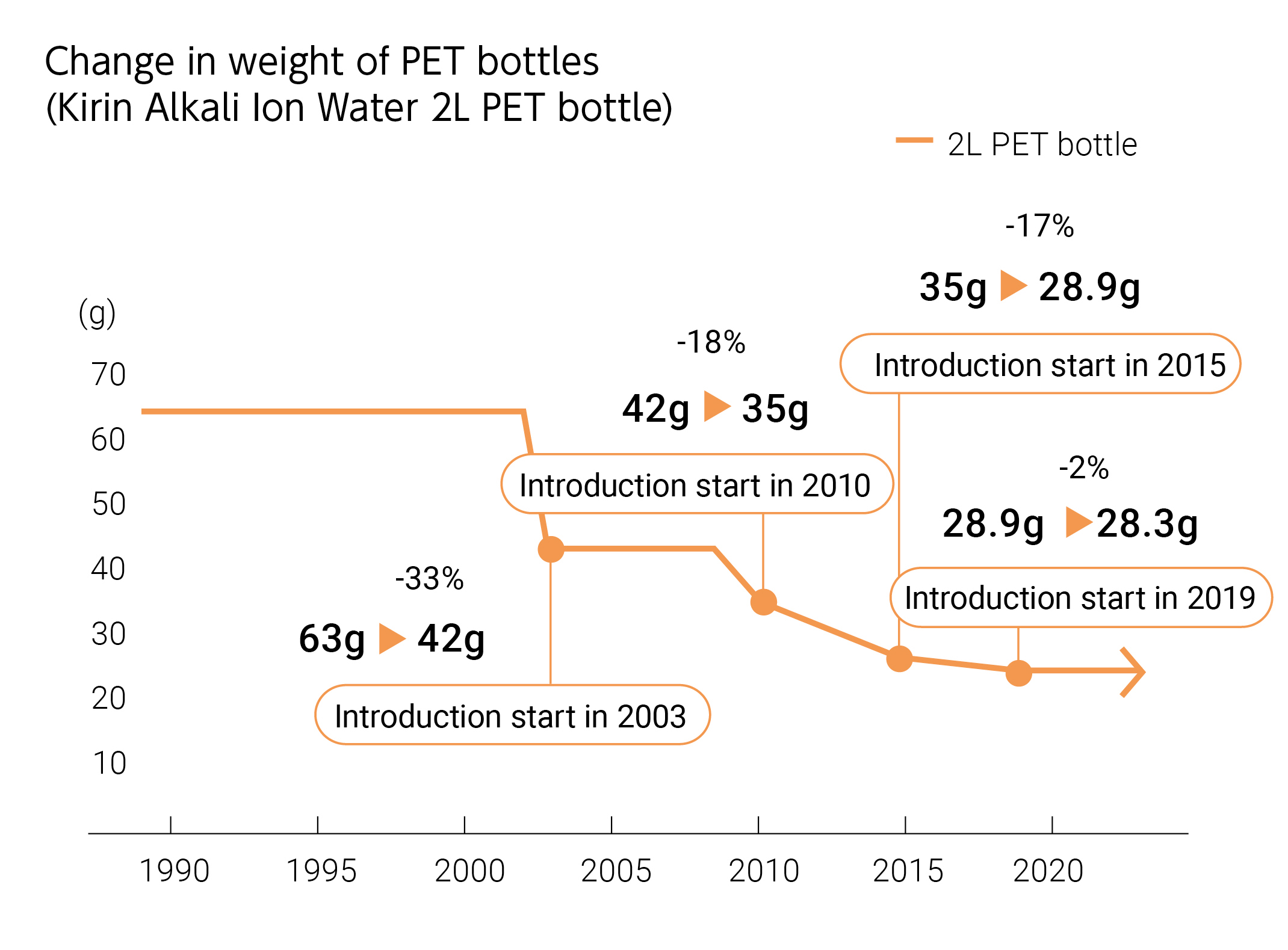
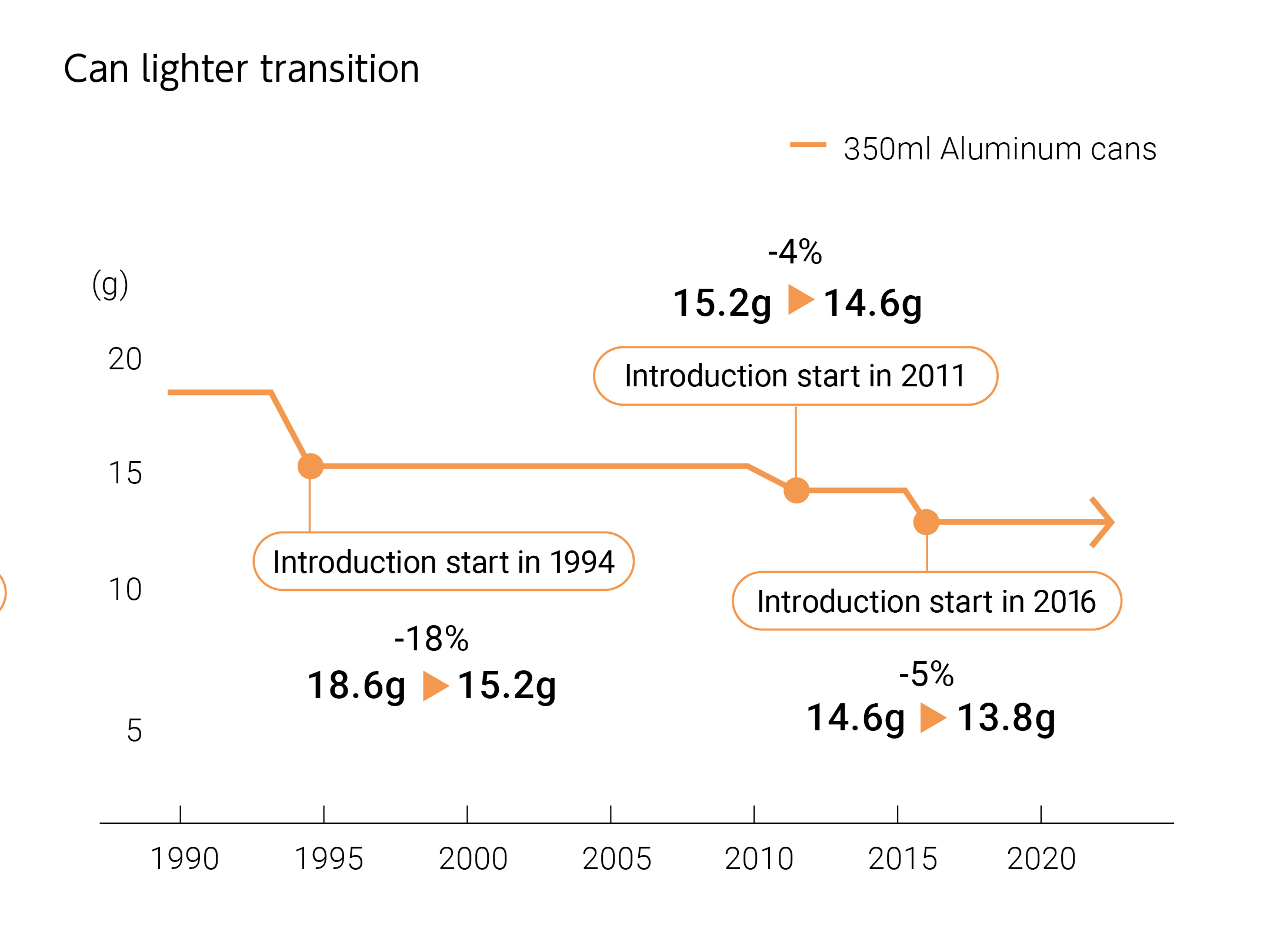
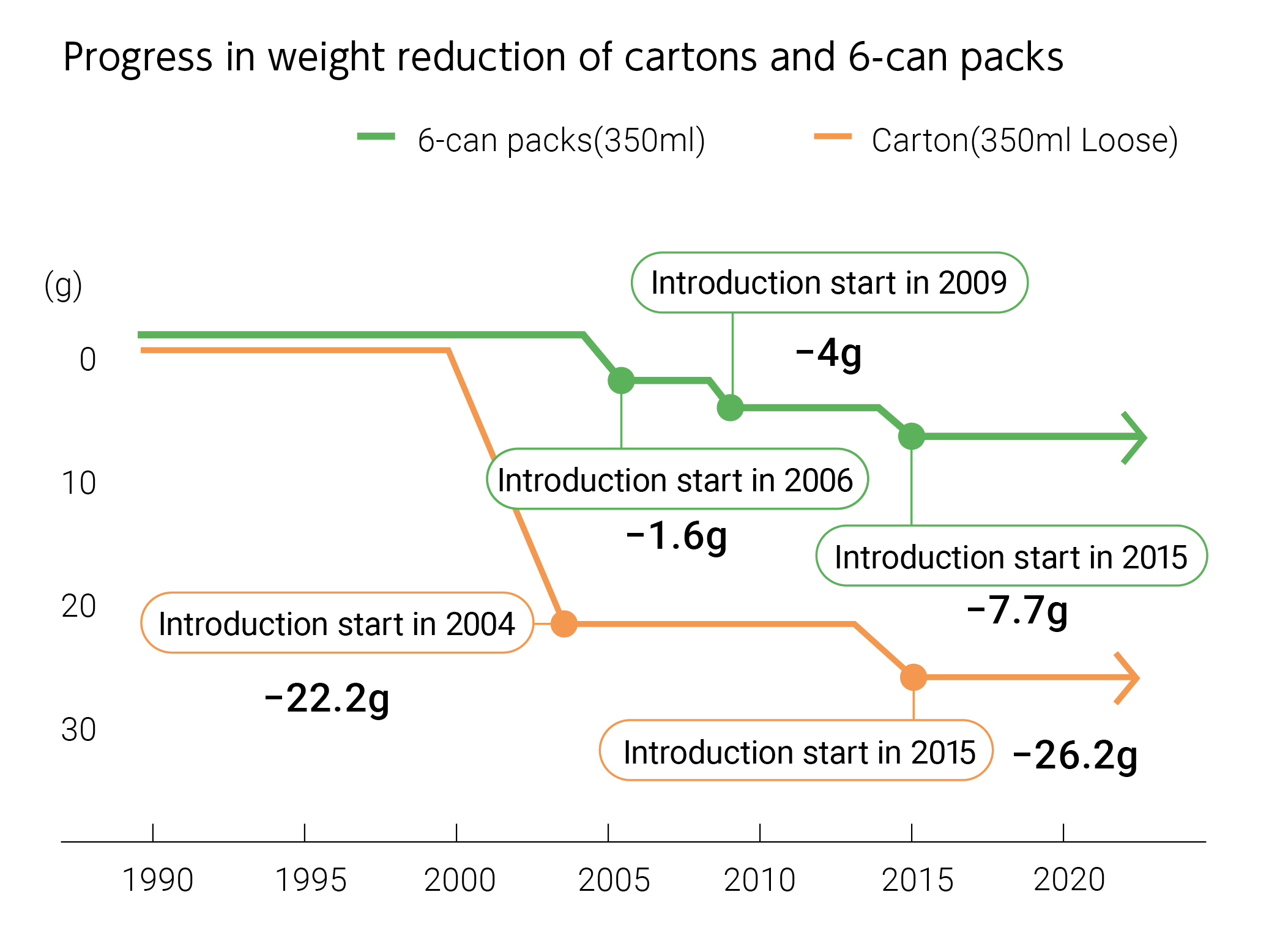
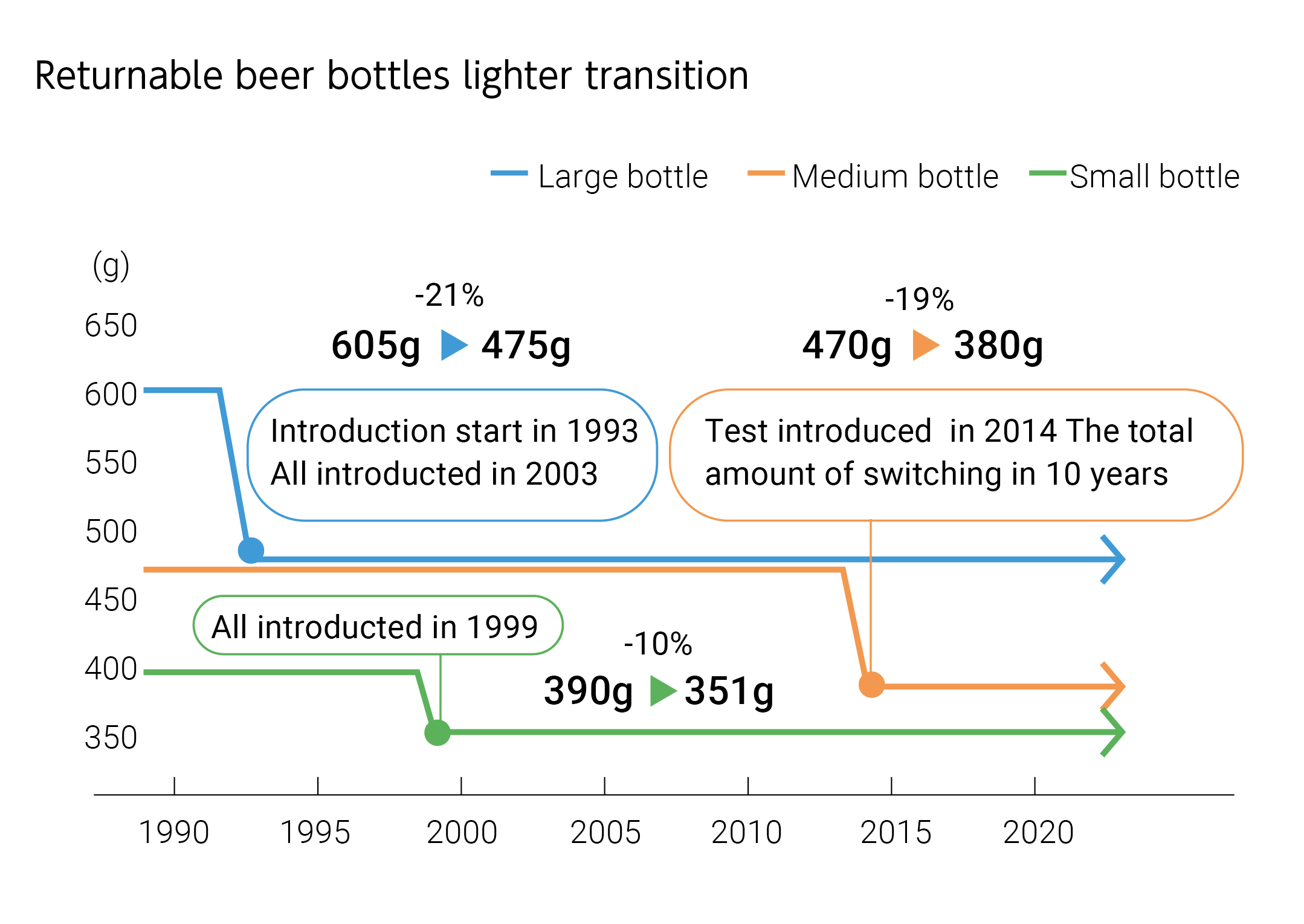
Progress in Reducing the Weight of Packaging Materials
Weight reduction ratio
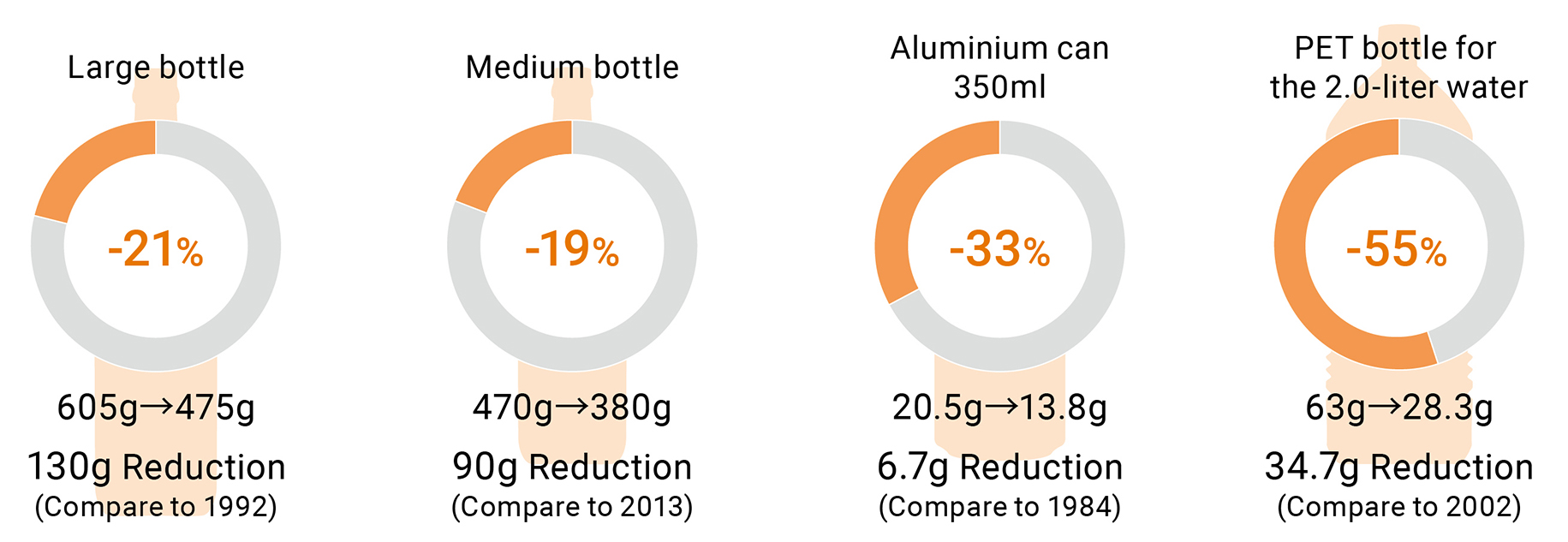
Weight Ratio by Container Type (Japan)
Please refer to ESG Data Book 2025, p.21.
Sustainable PET bottles
R100 PET bottles
In accordance with the “Kirin Group Plastic Policy” that we established in 2019, the Kirin Group is gradually expanding the use of “R100 PET bottles” made from 100% recycled PET resin.
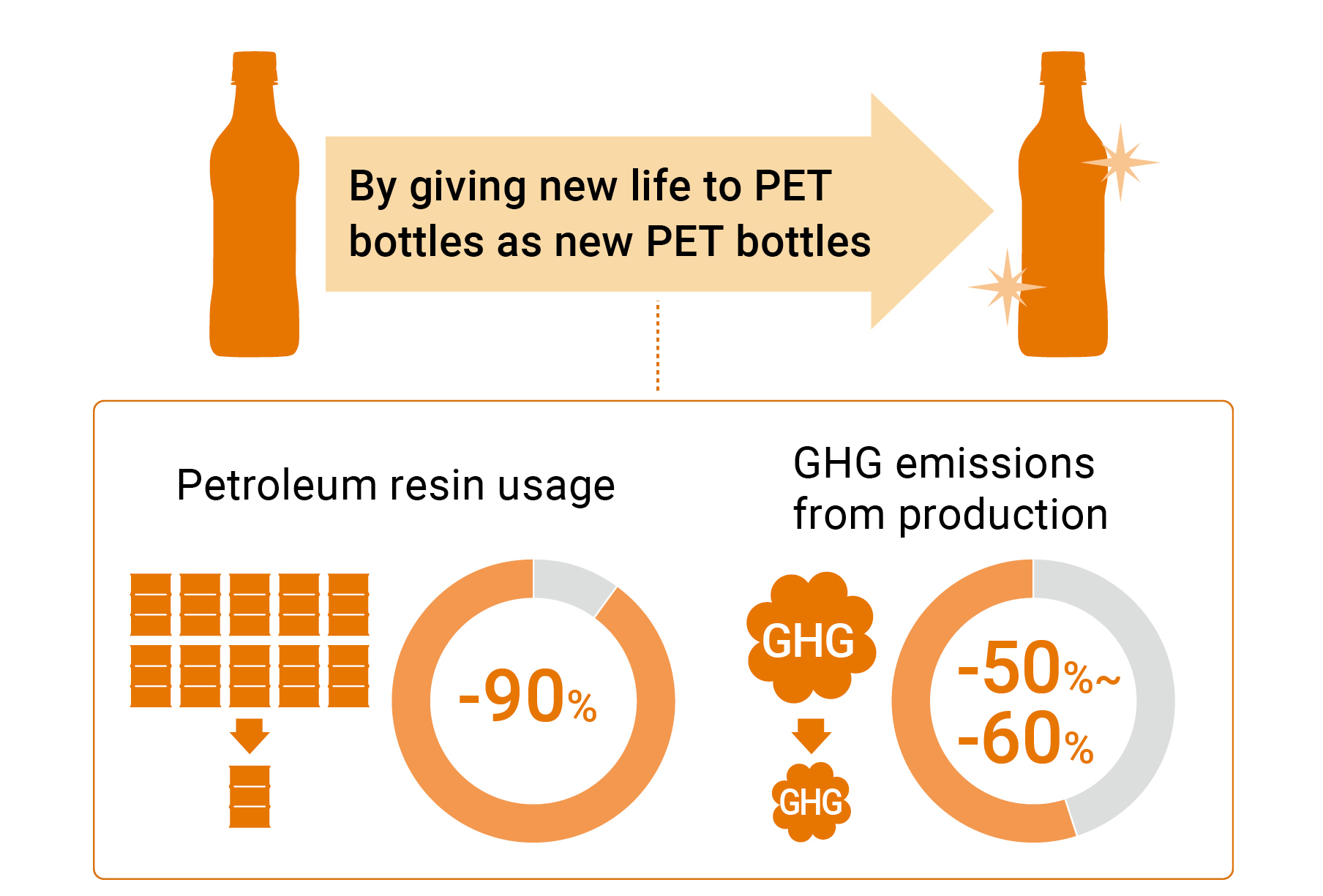
R100 PET bottles use mechanically recycled resin. By using this resin, we can reduce petroleum-based resin by 90% and GHG emissions by 50-60%, compared with conventional PET resin. We began using recycled resin for some of the packaging of Kirin Gogo-no-Kocha Oishii Muto (sugar-free) in February 2014.
Subsequently, in 2019, we began using “R100 PET bottles,” which use 100% recycled PET resin, for Kirin Nama-cha Decaf.
Our use of “R100 PET bottles” as of June 2025 is shown below.
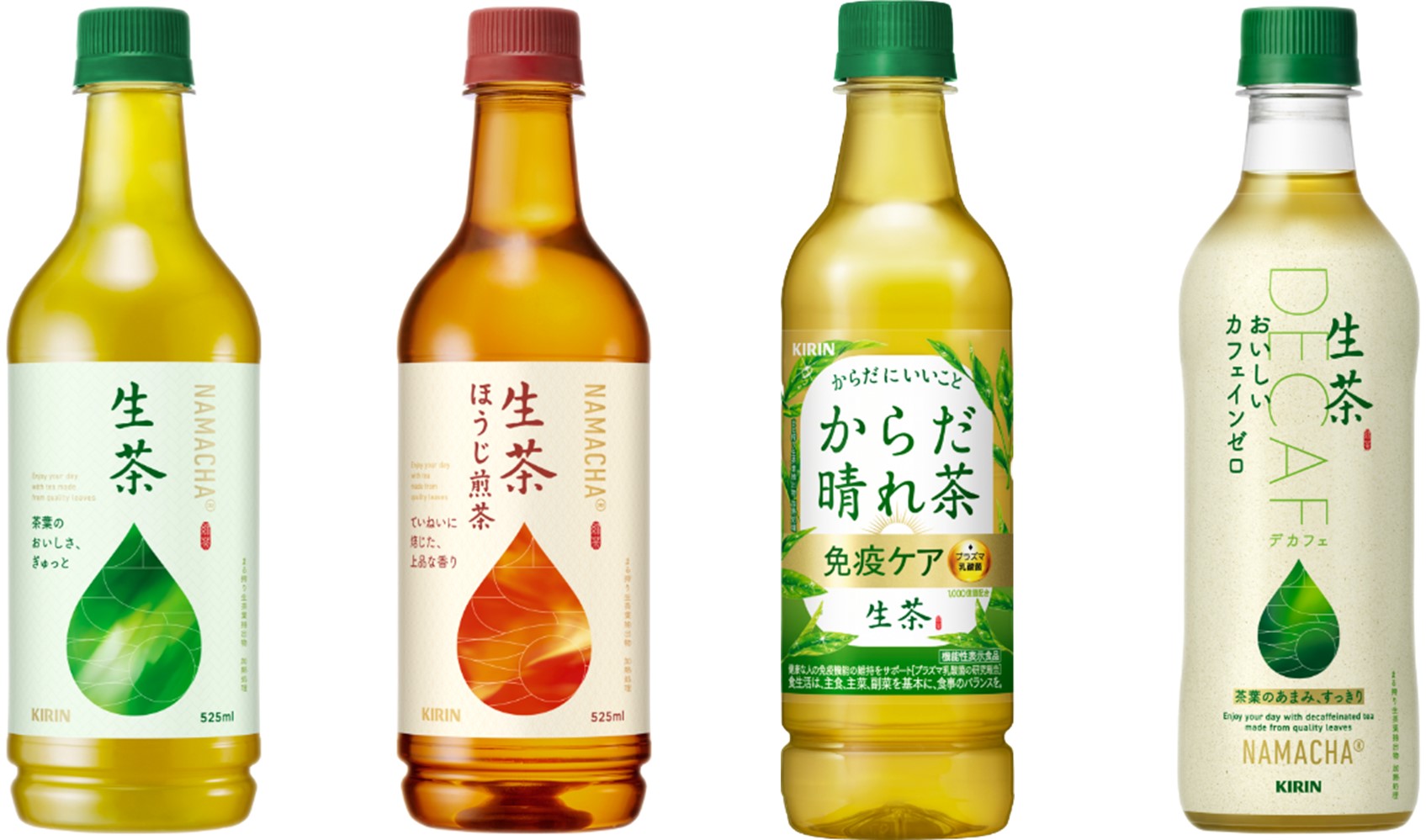
Kirin Nama-cha Hoji Sencha:600mL(Second photo from left)
Kirin Nama-cha Karada-Hare-cha:525mL(Second photo from right)
Kirin Nama-cha Oisii Caffeine Zero:430mL(The right photo)
-
*Product photos are as of the end of June 2025.
Chemical recycling
The Kirin Group is working on the development and practical application of technologies for recycling PET bottles through chemical recycling.
In the current mechanical recycling system, there are constituents that are difficult to remove from resins, and it is understood that the quality of resins deteriorates with repeated recycling.In chemical recycling, we sort, pulverize and wash used PET bottles. After the processes, we depolymerize them (chemical decomposition treatment), and break down and refine the PET into intermediate materials, and polymerize again into PET. It is possible to recycle used PET bottles into new materials as many times as we want by decomposing them down to molecular size. We can also recycle PET products other than used PET bottles into PET bottles with this technology.
In December 2023, we developed two technologies, an alkaline decomposition method and a method of refinement by electrodialysis. We developed the alkaline decomposition method at Kirin Central Research Institute and the method of refinement by electrodialysis in joint research with the Faculty of Science andEngineering, Waseda University. This refining method regenerates alkaline components during the refining process, which can then be reused in the decomposition process. Therefore, by combining these two technologies, we can realize a resource-circulating recycling process. With these technologies, we can carry out the processes for decomposing and recycling PET in a short time and with low energy, reducing environmental impacts and costs. These two PET chemical recycling technologies that we have developed are currently under patent filing. The Kirin Group is seeking partners to develop practical applications for these technologies, and we are working to achieve our vision for containers and packaging and create a society that continuously circulates resources, taking the environment into consideration.
In 2023, Kirin Brewery introduced chemically recycled resin for 3L PET bottles as containers for Tap Marchè and TAPPY, that are beer serving systems, at bars and restaurants. This was the first attempt to introduce chemically recycled resin for PET bottles for alcoholic beverages in Japan.
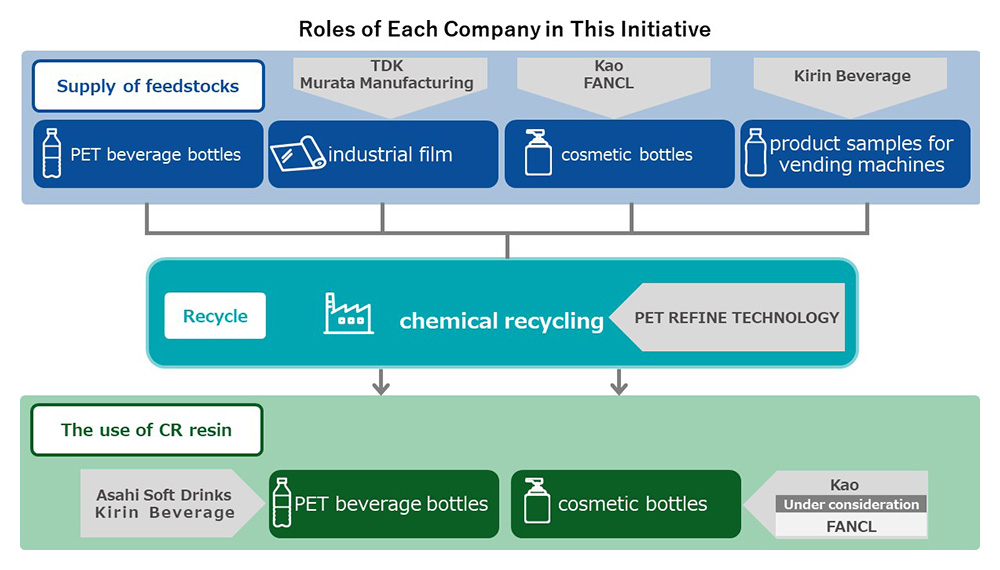
Meanwhile, we are also working to expand the supply of PET resin used as recycling feedstock. At the Institute for Packaging Innovation, we are promoting efforts to recycle non-food-use PET materials—such as industrial films and cosmetic bottles—into beverage PET bottles, and began trial operations in April 2025. Within a cross-industry collaboration framework, the laboratory led the safety evaluation of using chemically recycled resin made from non-food-use PET in food containers. The results of this evaluation were presented at the 120th Annual Meeting of the Japanese Society of Food Hygiene and Safety, where the presentation received the Young Researcher Outstanding Presentation Award."
Improving the Efficiency of Collection and Sorting of Used PET Bottles
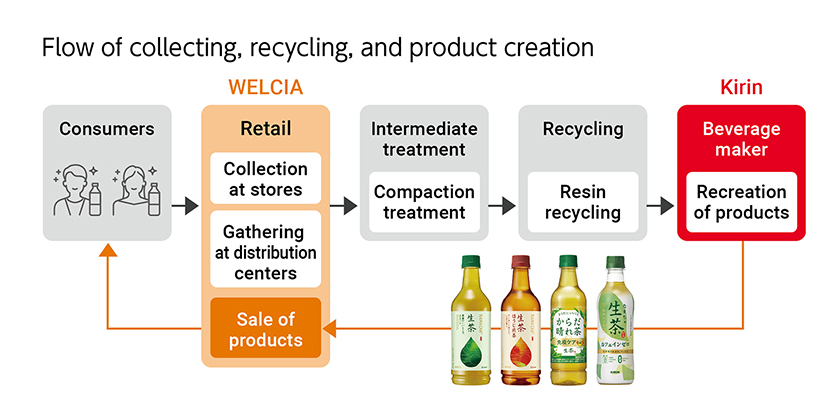
To efficiently collect and sort used PET bottles, we are collaborating with various companies to promote bottle-to-bottle recycling initiatives. Our partnerships have gradually expanded over the years: in 2022 (Welcia, Tobu Railway, Chiba Yakuhin), in 2023 (Sugi Pharmacy, Tokyo Tatemono), and in 2024 (Yomiuriland). We are also strengthening cooperation with local governments through formal agreements. One example is the partnership agreement signed in 2023 with Asahi Soft Drinks Co., Ltd. and the Joso Regional Wide-Area Municipal Union, which consists of four cities—Joso, Toride, Moriya, and Tsukubamirai—to promote horizontal recycling of PET bottles. All used PET bottles sorted by citizens in these cities are recycled into PET bottle raw materials through mechanical and chemical recycling, and reused in PET bottle products.
In addition, contamination of collected PET bottles with foreign substances such as trash poses a challenge to advancing bottle-to-bottle recycling. Securing a stable supply of high-quality used PET bottles suitable for recycling is an urgent issue. To address this, we have installed new-function recycling boxes with educational stickers near vending machines, encouraging consumer cooperation and promoting horizontal recycling across society.
Sustainable paper containers
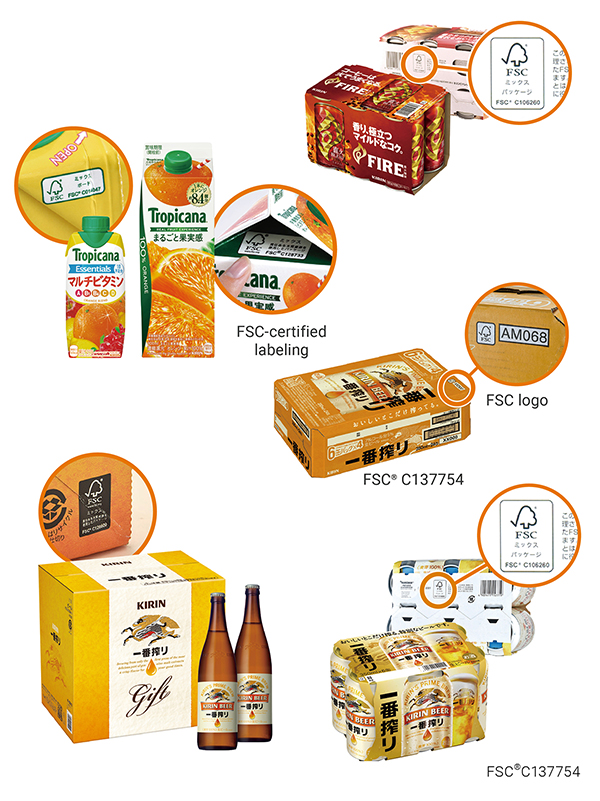
At the end of November 2020, the Kirin Group achieved the 100% use of FSC-certified paper in paper containers and packaging at Kirin Brewery, Kirin Beverage, and Mercian. This initiative covers paper containers, including “6-can packs,” “gift boxes,” “paper containers,” and “cardboard cartons for products,” and it is the first declaration and achievement of such a target by a Japanese manufacturer. In 2022, we revised the “Action Plan for the Sustainable Use of Biological Resources,” and expand companies complying the action plan to Kyowa Kirin, Kyowa Hakko Bio, Lion, Koiwai Dairy Products. We began related initiatives in these companies.
-
*Product photos are at the time of the event.
Reduce
Corner-cut cartons
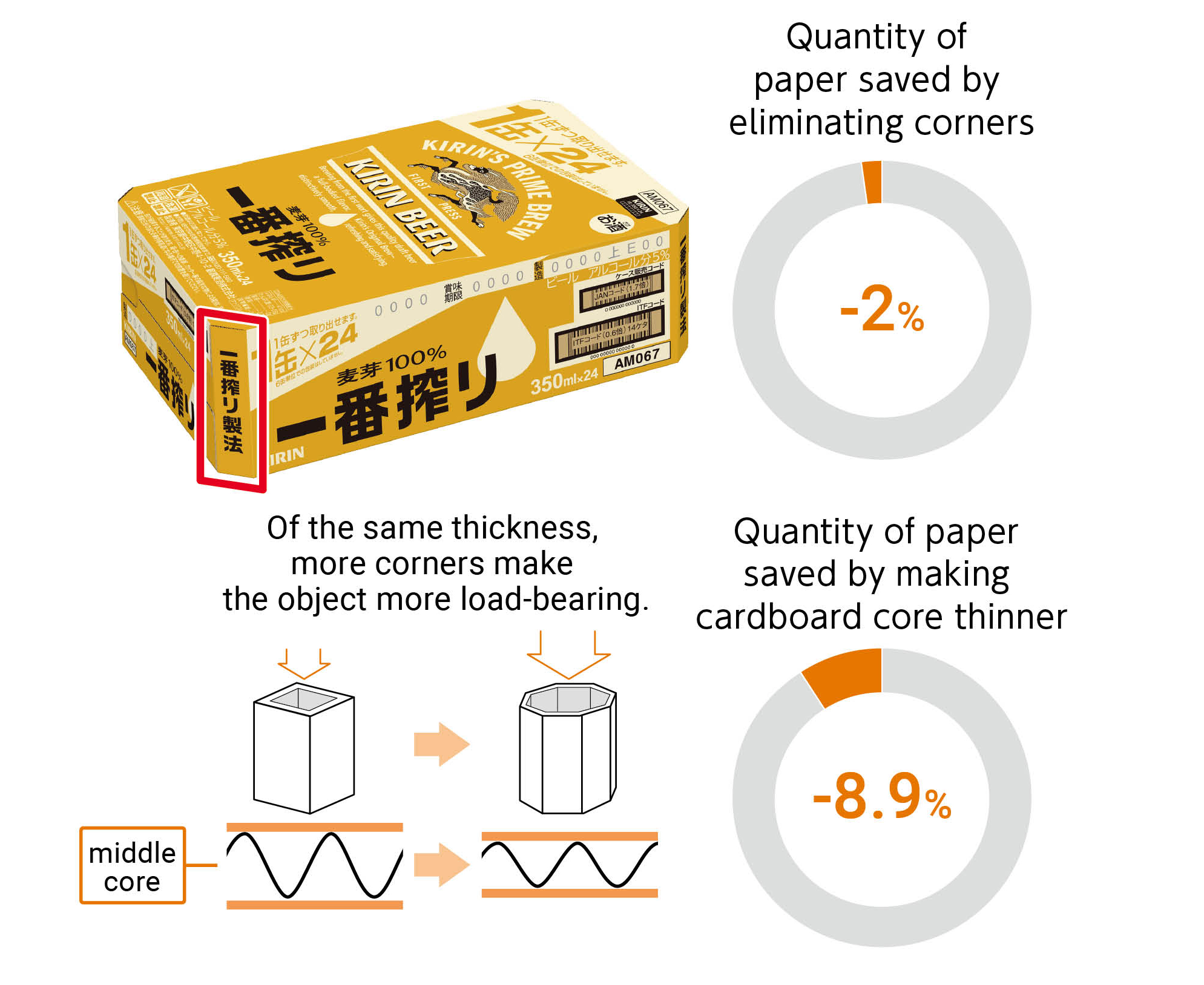
The Institute for Packaging Innovation developed “corner-cut cartons,” and we introduced them to the market in 2004. The beveled corners mean that the carton has eight sides, which makes the carton stronger, and the cardboard thickness has been reduced. This results in a 10.9% reduction in the weight of the carton compared to conventional cartons.
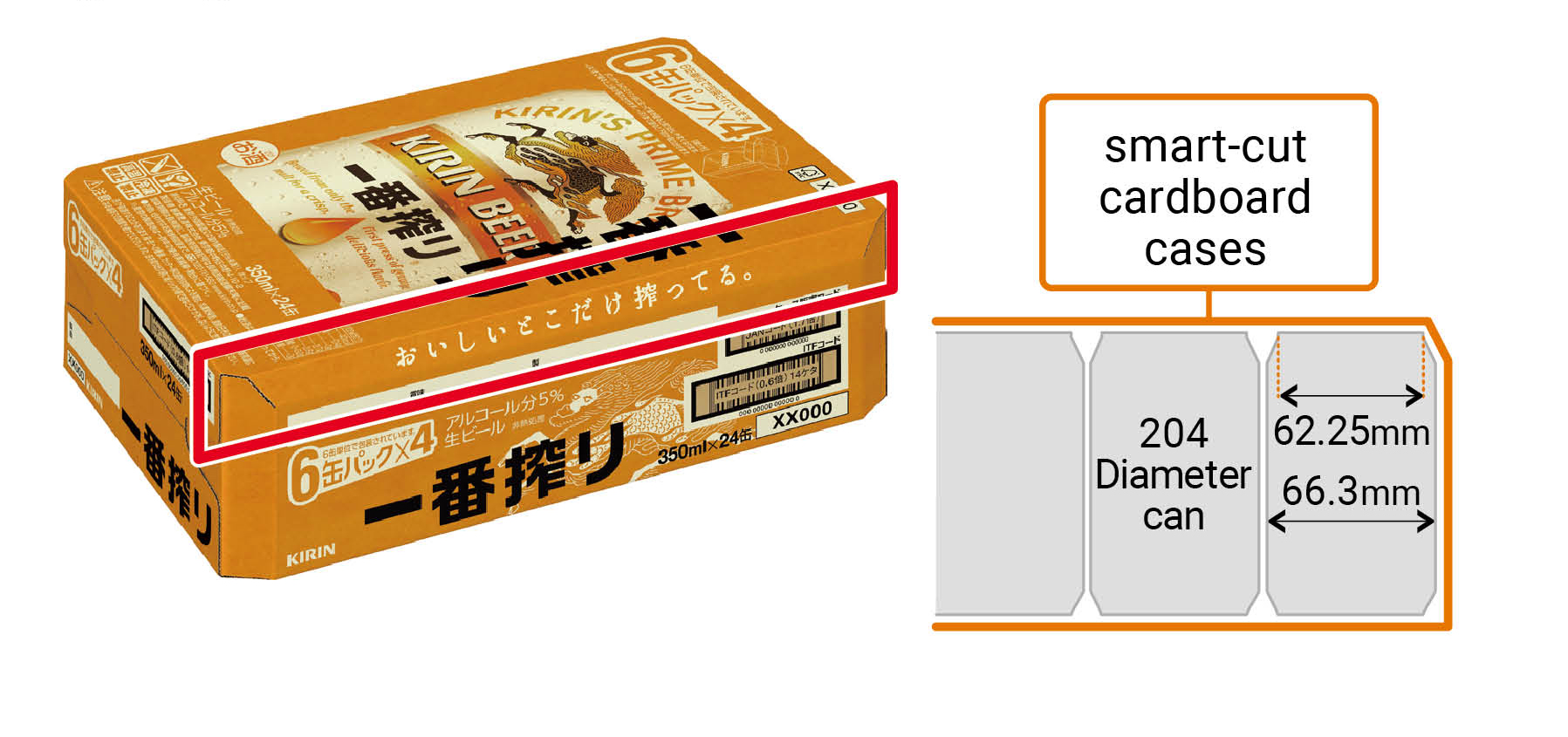
Smart-cut cartons
The smart-cut carton is based on the corner-cut carton technology. In addition to the reduction in weight, the corners of the long edges at the top of the carton have been cut to fit the space created by the lids of the 204-diameter can.
This has resulted in a 16% weight reduction compared to the previous corner-cut carton. The Institute for Packaging Innovation developed the smart-cut carton in conjunction with a container and packaging manufacturer, and obtained a joint design registration.
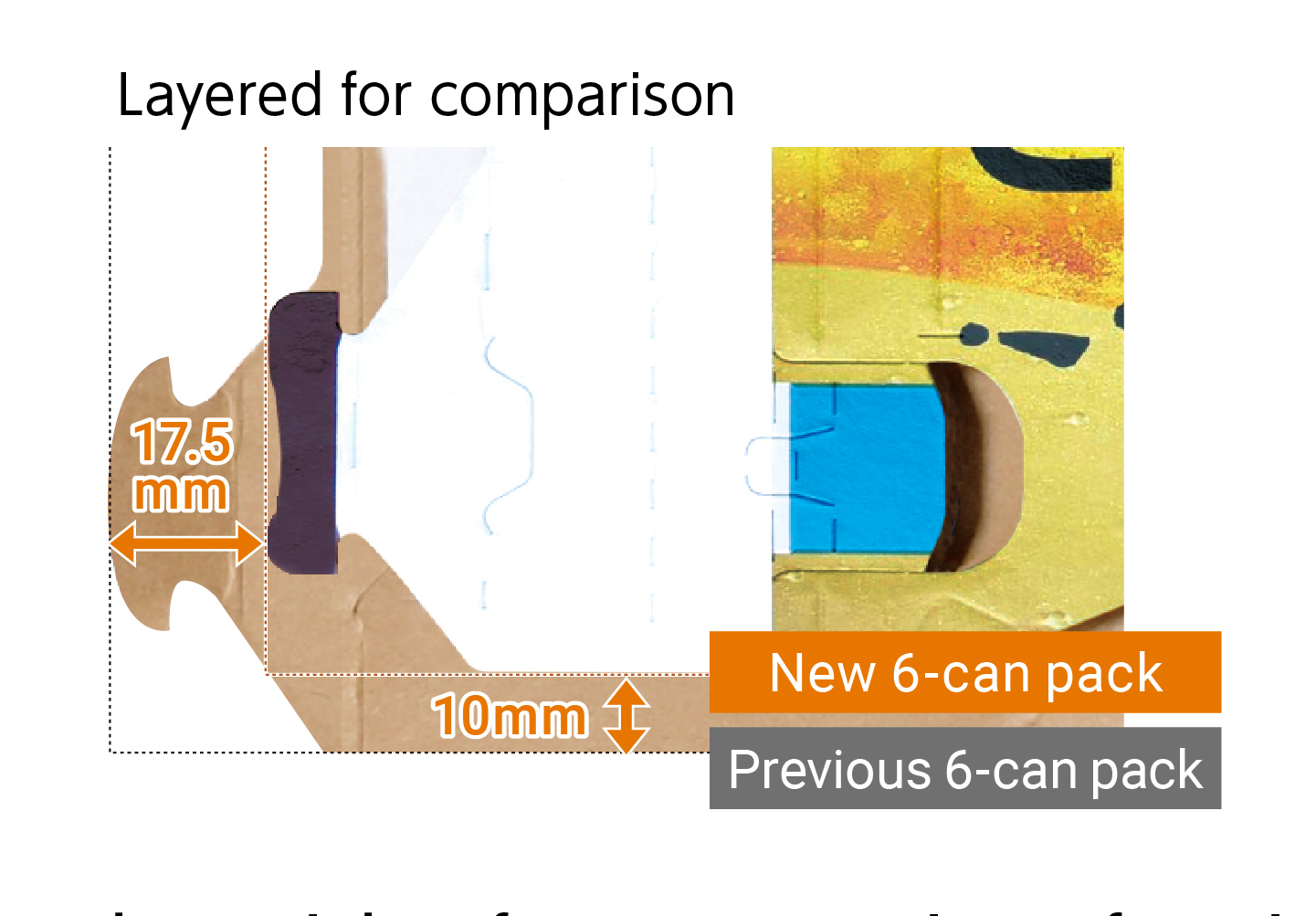
6-can pack
In addition to being easy to hold and remove, 6-can pack containers of beer are designed to be lightweight. For example, we have installed a cut-out section at the sides of the pack to fit the can edge (Kirin patent), and use a “can bottom lock structure” to stabilize the bottoms of the can with paper. These innovations have resulted in a reduction in packaging materials of 4 grams, or 8%, per 500 ml 6-can pack. At the same time, they have also improved the pack’s can-holding power.
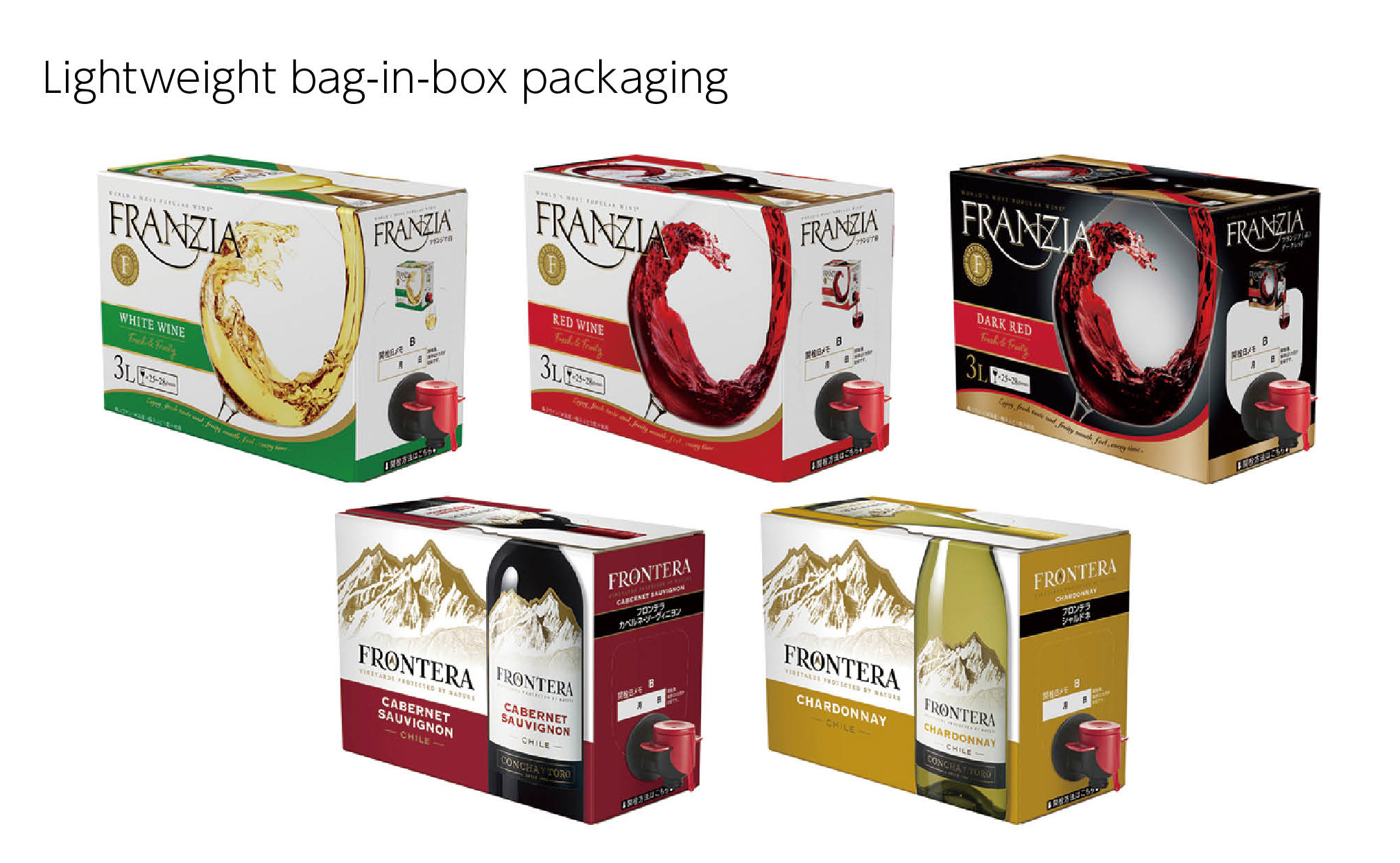
Reducing the weight of paper containers for wine
Since March 2022, Mercian has reduced the weight of containers for its wine. Specifically, this innovation was applied to five types of wine, namely FRANZIA (red, white, dark red) bag-in-box and FRONTERA (Cabernet Sauvignon and Chardonnay) wine-fresh servers.
For these products, Mercian uses bag-in-box containers, consist of outer paper boxes and inner flexible plastic bags. By reducing the weight of the outer box from 190g to 143g, by approximately 25%, we reduce the use of paper resources by around 31 tons per year.
-
*Product photos are at the time of the event.
Reducing the weight of PET bottles for wine
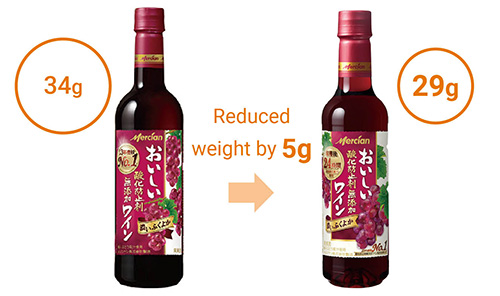
In 2022, the Institute for Packaging Innovation developed the lightest 720ml PET bottle for wine in Mercian’s history, reducing the weight from the conventional 34g to 29g—a 5g reduction. This lightweight PET bottle received the 46th Kinoshita Award*1 for Packaging Technology. The award recognized the bottle’s approximately 15% reduction in resin usage while maintaining both the “Bordeaux shoulder shape” and a sleek body design, as well as its ability to preserve wine freshness over time thanks to the Kirin Group’s DLC*2 gas barrier coating technology.
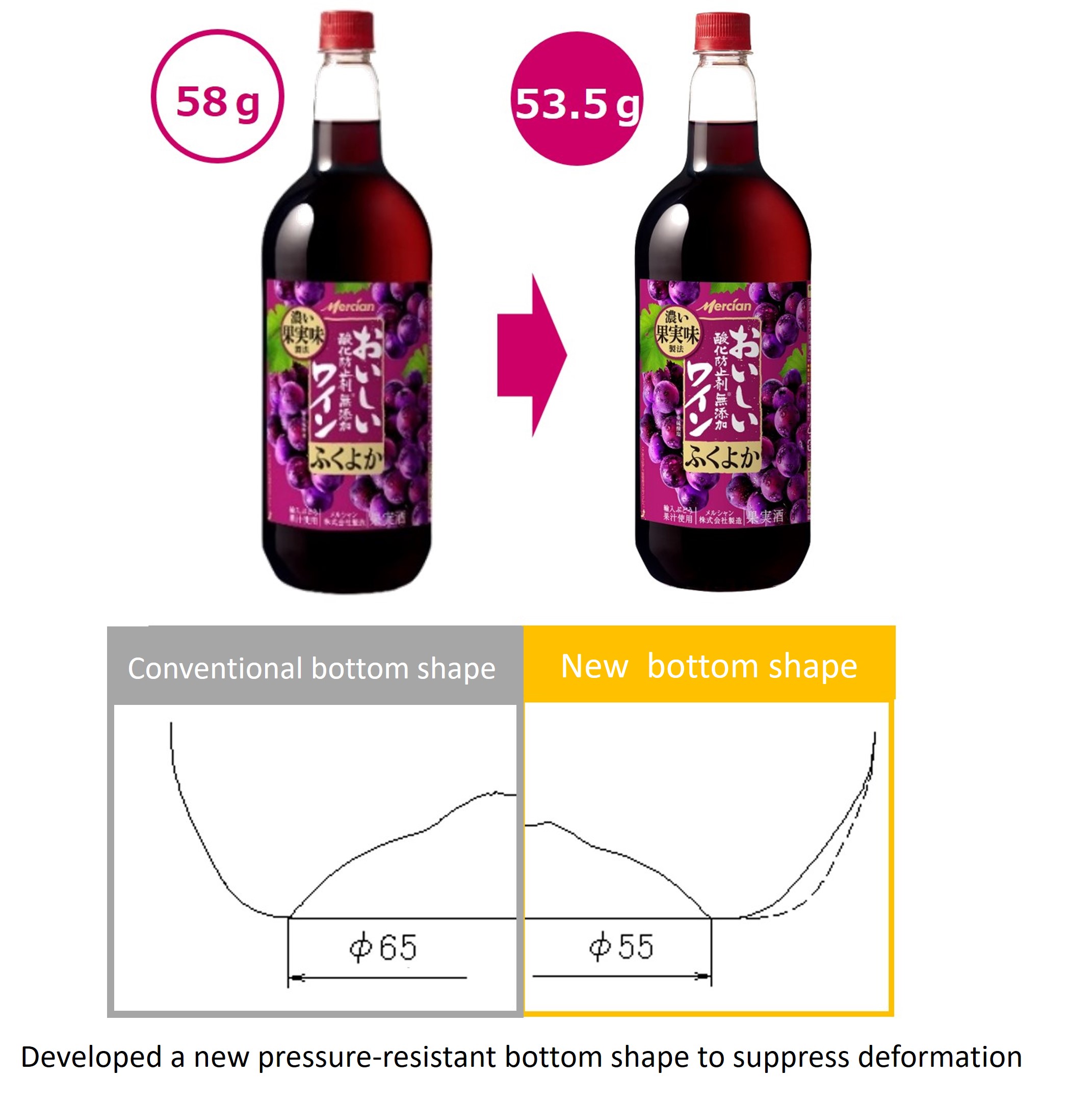
Furthermore, in July 2024, the laboratory launched the lightest-ever 1500ml PET wine bottle in Mercian’s history, reducing the weight from 58g to 53.5g—a 4.5g reduction. These lightweighting initiatives contribute to reducing PET resin usage and lowering GHG emissions.
-
*1The award is presented by the Japan Packaging Institute to recognize outstanding achievements in packaging technology. It is one of the most prestigious awards in the Japanese packaging industry.
-
*2Abbreviation for Diamond-Like Carbon (Patent No. 4050648, etc.), a technology that forms a thin film of carbon on the inside of PET bottles to inhibit the permeation of oxygen, water vapor, carbon dioxide and other gases.
Use of roll labels
Since September 2020, Kirin Beverage has used “roll labels” on some PET bottle products. There are two main types of labels for PET bottled soft drinks: shrink labels and roll labels. We place shrink labels over bottles in the filling plant, then apply heat to shrink the label. This means a certain thickness of labels is required. On the other hand, we attach roll labels by wrapping them around the PET bottle, which enables us to make the label thinner. Customers can easily remove the label, contributing to sorting trash and recycling. At Kirin Beverage, we use roll labels for some products sold exclusively in vending machines, such as Kirin Namacha, Kirin Gogo-no-Kocha Oishii Muto, Kirin Loves Sports, Kirin Amino Supplement C, and Kirin Tennensui Natural Mineral Water.
Since February 2023, additional roll labelers have been installed at Kirin Beverage Shonan Plant and Shiga Plant to expand application of roll labels on the company’s brands.
No label product
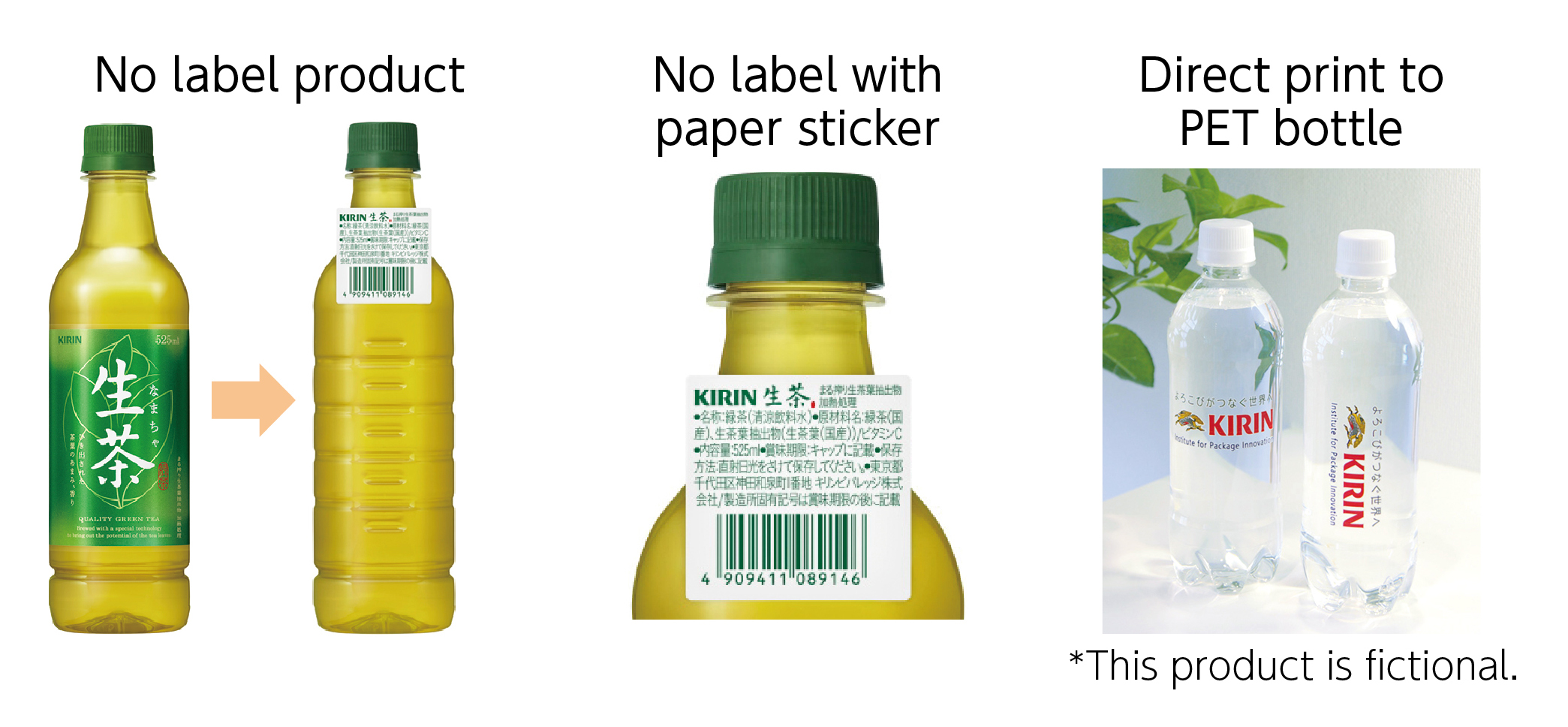
Since March 2021, we have been selling Kirin Nama-cha No Label 6-Pack and Kirin Nama-cha Hoji Sencha No Label 6-Pack at merchandise stores in Japan. We have also been selling Kirin Nama-cha No Label and Kirin Nama-cha Hoji Sencha No Label exclusively online. In May 2022, we expanded our range of no label products with the launch of Kirin Gogo-no-Kocha Oishii Muto (sugar-free) No Label and Kirin FIRE ONE DAY Black No Label exclusively online. In April 2023, we began sales of a new product, Kirin Shizen-ga-Migaita Natural Water No Label, exclusively online. In June 2022, we began test sales of Kirin Nama-cha No Label with Paper Sticker at some mass merchandise stores in the Tokyo metropolitan area. By attaching small paper stickers that provide required information, we can sell individual products without conventional labels. In August 2023, we announced PET bottle direct printing technology compatible with recycling processes.
-
*Product photos are at the time of the event.
Reducing the weight of aluminum cans
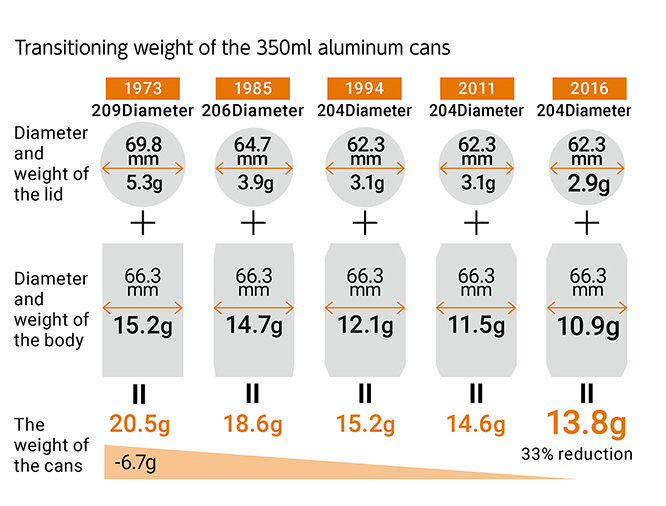
In 2011, we achieved a weight reduction of our aluminum cans approximately 29% with our 204 diameter can compared with the 209 diameter can which was standard at the time, by reducing the diameter of can lids, narrowing the top and bottom edges, thinning the walls. Working with materials manufacturers, we developed an aluminum can with thinner can lids and a body in 2016. We have reduced the overall weight of the can by approximately 5% (from 14.6g to 13.8g). This represents a weight reduction of 33% (6.7ɡ) from the 209 diameter can. Weight reduction is necessary for both steel and aluminum cans. In particular, aluminum requires a large amount of electricity for smelting, so weight reduction contributes significantly to the reduction of Scope 3 GHG emissions.
Lightest returnable glass bottles in Japan
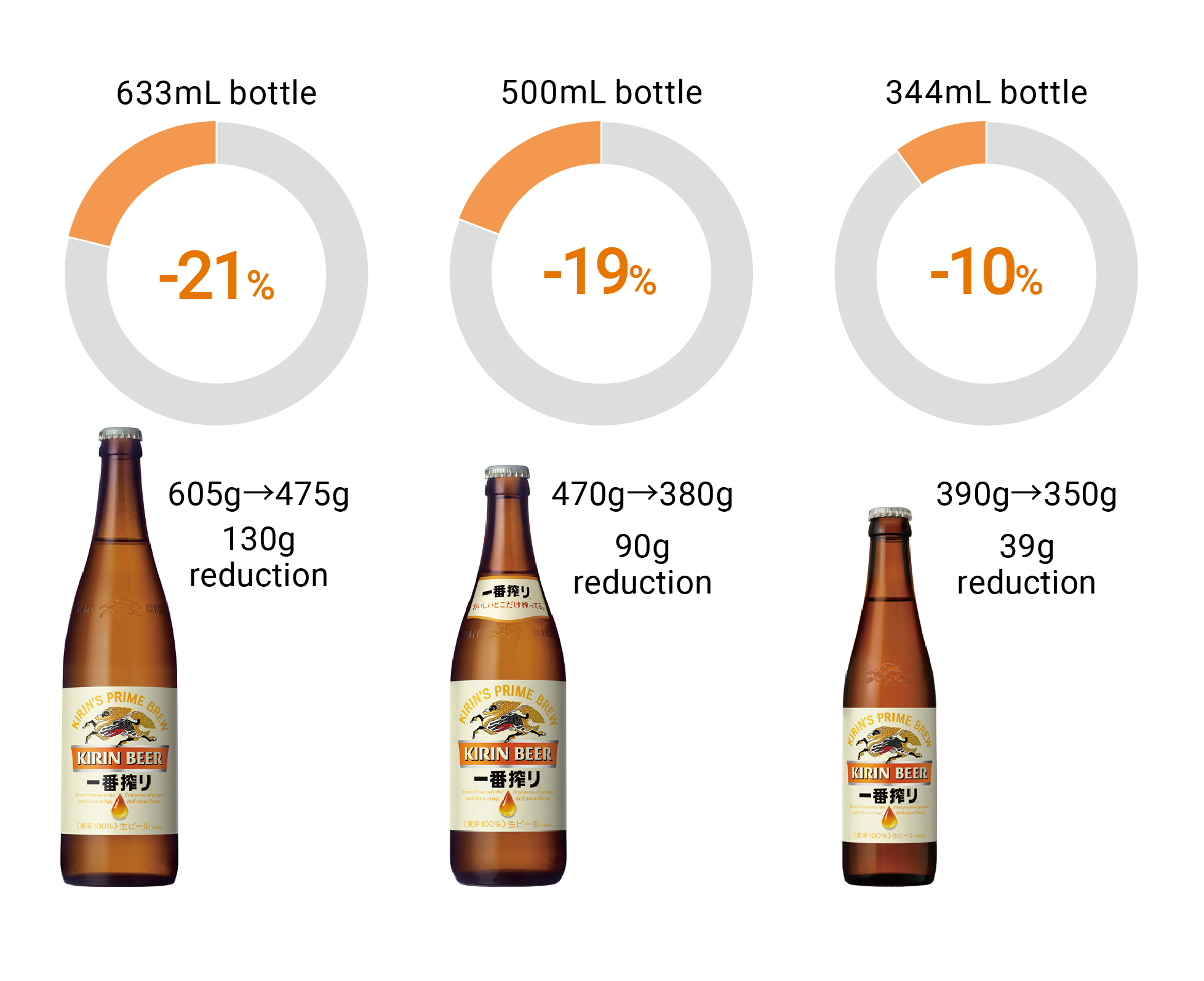
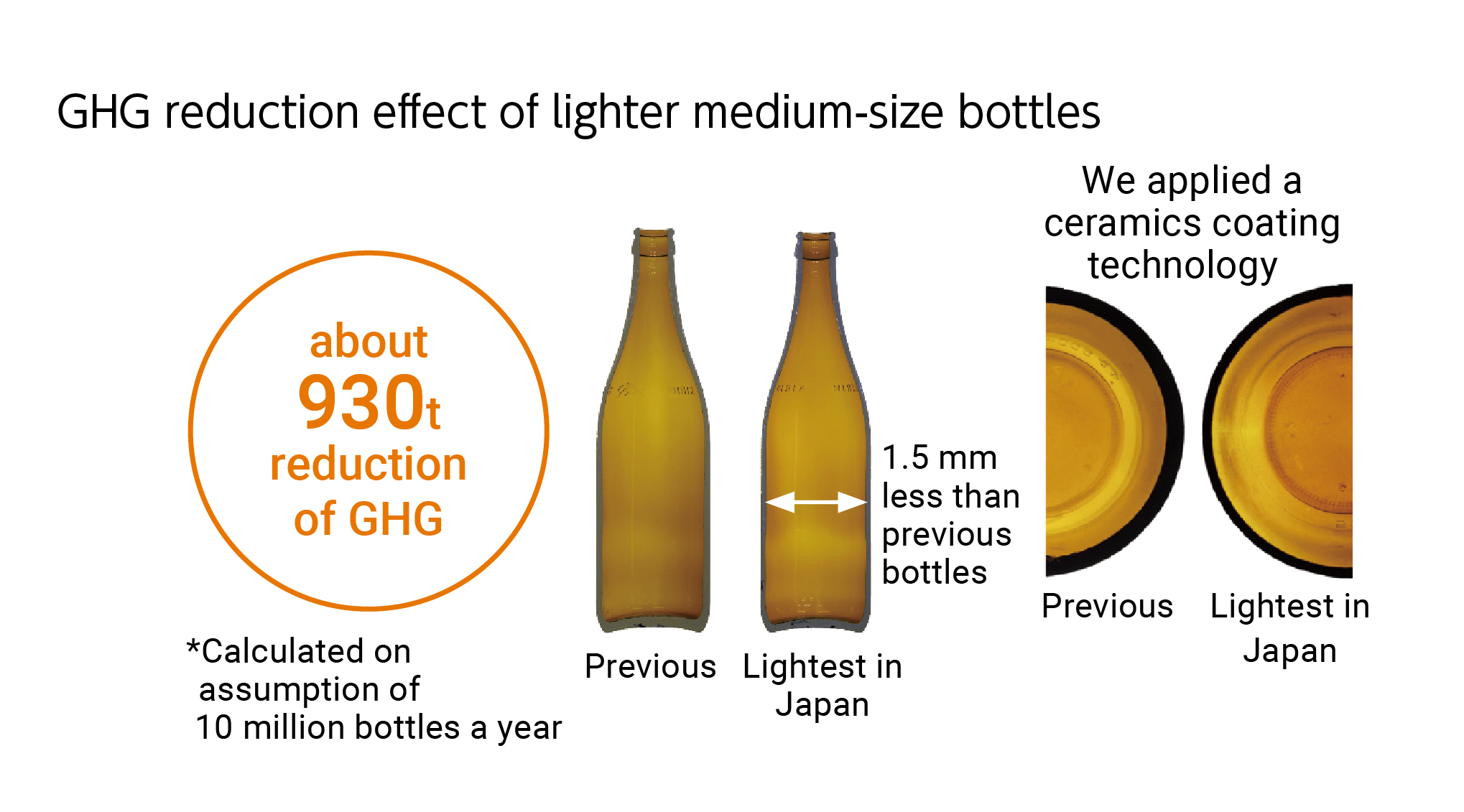
Our returnable glass bottles for beer are the lightest among those produced in Japan in all sizes (633mL, 500mL, and 334mL). As well as being light in weight, returnable glass bottles need to be durable enough to maintain their returnable functionality and strong enough to ensure consumer safety and security of mind. To solve this dilemma, the Institute for Packaging Innovation created the lightest returnable glass bottles by making excellent use of innovations such as a ceramic coating that forms a thin film on the bottle’s outside surface, an impact-resistant shape design, and a bottle mouth design that satisfies the conflicting requirements of being easy to open and able to be sealed tightly and that is also strong enough not to chip when opened.
Reuse
Reuse of glass bottles
In Japan, people have collected and reused glass bottles over and over since the Meiji Era (more than a hundred years ago). Returnable glass bottles come back to plants and are washed thoroughly inside and outside to make them as clean as a new bottle. After stringently checking the bottles for scratches and cracks with an empty bottle inspection machine, we put the bottles back into production lines and fill them with beer. When handled carefully, returnable glass bottles last for an average of about eight years. This means they are used around 24 times. For trends in the sales, collection volume, and collection rate of returnable bottles at Kirin Brewery, please refer to ESG Data Book 2025, p.21.
Recycle
In line with the “Kirin Group Plastic Policy” established in 2019, the Kirin Group is gradually increasing the ratio of recycled resin used in PET bottles, aiming to reach 50% by 2030 and achieve 100% sustainable packaging by 2050.
Additionally, Lion has formulated the “Sustainable Packaging Strategy” to promote recycling in Australia and New Zealand. In collaboration with APCO (Australian Packaging Covenant Organization), Lion has set goals to use over 50% recycled materials in packaging and ensure that 100% of packaging is reusable, recyclable, or compostable by 2025. Progress toward these goals has been steady, and in 2023, Lion was recognized by APCO as a best practice example.
Recycling of PET bottles
The Kirin Group promotes recycling of PET bottles as a member of the Council for PET Bottle Recycling in Japan. Under the council’s Fourth Voluntary Action Plan (FY2021-FY2025), members of the council are working toward a target recycling rate of at least 85%. In 2023, the recycling rate was 85.0%, achieving the target. In October 2022, Kirin Beverage introduced new recycling boxes, specially designed by soft drink industry to prevent other objects than PET bottles, next to vending machines, in order to reduce contamination by foreign substances. We had installed 1,000 boxes by the end of 2022. We will continue cooperating with the industry to promote bottle-to-bottle recycling activities.
Recycling of PET Bottle Caps for Alcoholic Beverages
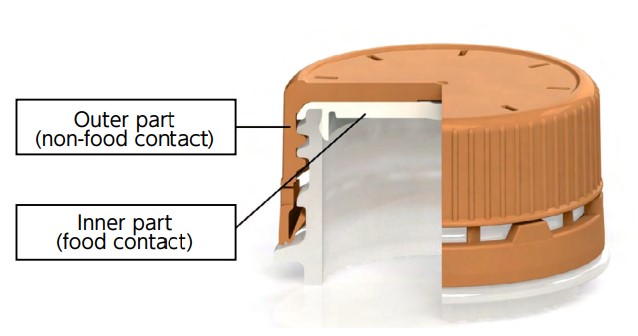
In 2024, in collaboration with Nihon Yamamura Glass Co., Ltd., we conducted Japan’s first demonstration test aimed at the practical implementation of horizontal recycling of PET bottle caps used for alcoholic beverages. This initiative enables horizontal recycling by using a two-piece cap that contains 10% recycled resin in the outer shell (non-food-contact part).
Approximately 40,000 caps were used in the demonstration, and it is expected to reduce GHG emissions by about 1.7g per cap.
Recycling of glass bottles
In Japan, beer bottles that have become too old to be reused as returnable bottles, as well as one-way bottles used only once, are crushed into cullet and primarily reused as raw materials for new bottles. Efforts are also being made to utilize cullet from colored bottles, which are more difficult to recycle into new glass bottles, by expanding their reuse into “other applications” such as tiles, blocks, and road paving materials.
In Australia, where glass accounts for the largest proportion of material input, Lion is focusing on increasing the recycling rate of bottles through close collaboration with suppliers. Australia has implemented container deposit schemes in seven out of its eight states and territories. In Victoria, Lion continues to play an active role as a founding member of VicReturn, the coordinator of the container deposit scheme. This initiative began in November 2023 and had collected 500 million containers as of June 2024.
Recycling of aluminum cans
The Kirin Group is promoting the use of aluminum cans with a high proportion of recycled metal. In Japan, we are a member of the Aluminum Can Recycling Association and support the collection of used aluminum cans to promote recycling. Empty aluminum cans discarded at beer factories are fully recycled by can manufacturers and reused 100% as aluminum beer cans.
Since producing new aluminum requires a large amount of electricity and emits significantly more GHGs compared to recycled materials, reducing environmental impact is a key challenge. To address this, Kirin Brewery, in collaboration with two other major domestic beer companies, has fully adopted the “EcoEnd™” beverage can end, which emits approximately 40% less GHG during production.*1 Starting in February 2025, this can end will be gradually introduced in some beer products sold by each company.
EcoEnd™ was jointly developed by Toyo Seikan Co., Ltd. and UACJ Corporation as an effective means of reducing GHG emissions. It meets the required strength and performance standards for can ends while promoting the circular use of recycled materials. As a measure contributing to Scope 3 emissions reduction, we are also considering expanding its use to products beyond beer.
-
*1Compared to conventional products by Toyo Seikan Co., Ltd.; reduction per can end.
Under Lion, Stone & Wood Brewery in Australia has launched the “Re-InCan-Ation” project in partnership with suppliers such as Visy, Novelis, and Rio Tinto, aiming to promote sustainable packaging. This initiative uses cans made from 83% recycled aluminum and low-carbon primary aluminum, targeting a 59% reduction in CO₂ emissions compared to conventional cans.During an 18-month trial, 15 million cans were sold, with an estimated reduction of 1,235 tons of CO2.
APCO (Australian Packaging Covenant Organisation) recognizes the importance of this initiative in addressing Australia’s recycling challenges, where only 64% of aluminum beverage cans are currently recycled. Through this project, Lion aims to encourage ethical consumption by offering consumers sustainable choices. The company has already begun engaging with consumers via social media, receiving positive feedback and interest in the initiative as a practical way for individuals to contribute.

Key data related to Containers and Packaging